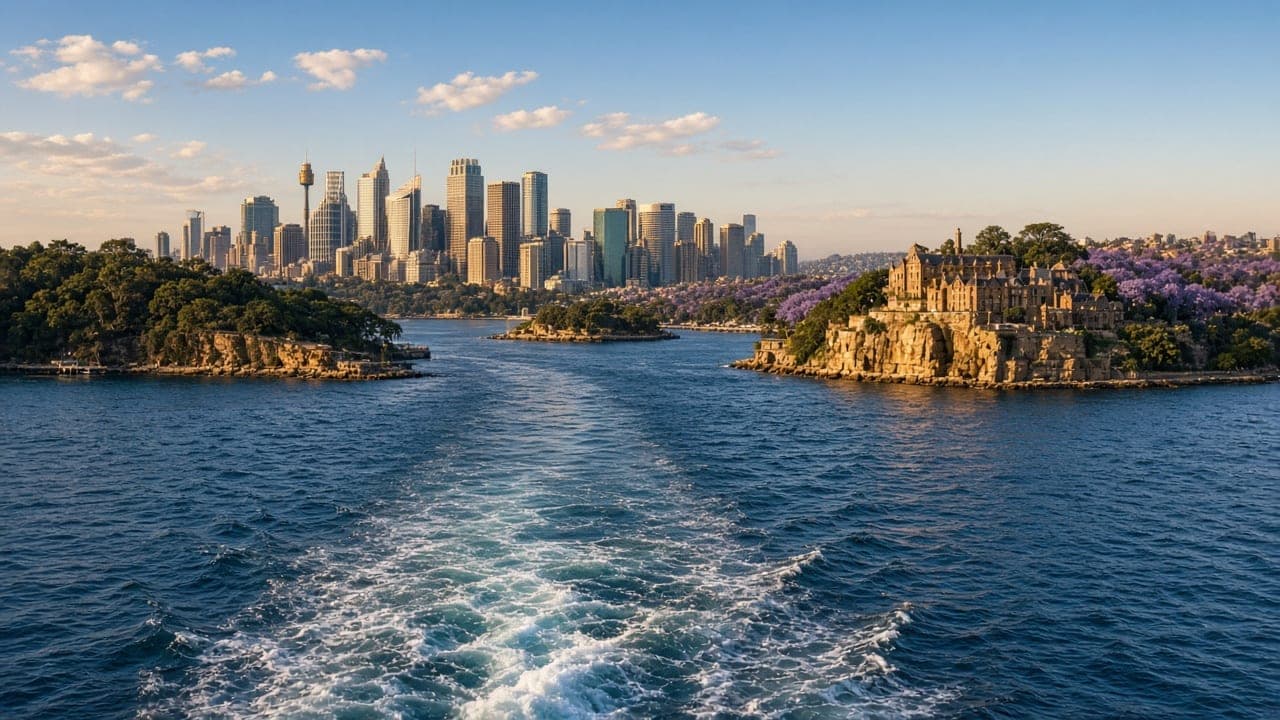
Sydney is easiest to plan when you stop treating it as a skyline and start treating it as a drowned river valley with suburbs, beaches and a rectangular sporting calendar arranged around the water. The harbour is not decoration. It is transport, weather, weekend geography and the reason a “city day” and a “coast day” can be the same day if you catch a ferry instead of a tunnel.
When is the best time to go to Sydney?
Late autumn and early spring are the most forgiving windows for walking, ferry hopping and outdoor sport. March to May often brings warmer water than the air suggests and fewer of the humid extremes of high summer. September to November is windier, with swimming still possible and the city coming out of the football codes. December to February is hot, humid and busy around the harbour edge. June to August is the clearest air, the shortest days, and the heart of the rugby league, rugby union and AFL calendars that a sport-lover actually came for.
There is no month in which Sydney is closed. There are months in which you should plan for heat, for school-holiday pressure, or for a stadium rather than a beach. Confirm current conditions with the Bureau of Meteorology for Observatory Hill or your actual suburb — the city is large enough that a hot western afternoon and a cool harbour evening can share a date.
How the harbour organises a week
Give at least one day to the water itself: a ferry, a foreshore walk, a swim at a harbour bath or an ocean beach, and the patience to watch weather move up the valley. The sandstone headlands are public land in many places; they do not require a ticket to be understood. The inner city is walkable if you pick a neighbourhood and stay inside it rather than crossing the basin four times in a taxi.
Ocean beaches face a different swell and a different wind from harbour beaches. If you have one swim day, choose the coast that matches the wind forecast rather than the name you already know. If you have a sport day, the rectangular stadiums and the cricket grounds are inner-city or inner-west problems, not beach problems. Do not try to do Bondi and a night match on opposite sides of the city without a time buffer.
Sydney for sports lovers
Sydney is a four-code town. Rugby league is the winter vernacular in much of the city. Rugby union has its own grounds and calendar. Australian football has a growing Sydney footprint with a rectangular-to-oval conversion that still surprises visitors who think the city is only a rugby town. Cricket occupies the summer. You do not need to pick a team to use this calendar: you need to know which code is in season, which venue is actually close to your stay, and whether the fixture is a night game that will eat your evening.
Walkable sport is underrated here. Foreshore paths, ocean pools and park ovals are free to look at. Paid tickets, if you want them, belong on the operator or venue site — we do not list prices. A sport-lover’s week that also includes a ferry and a sandstone walk will feel more like Sydney than a week that only includes stadiums.
Day-trip radius
Wollongong sits south along the Illawarra, with an escarpment, a surf coast and a university city that is not a suburb of Sydney. It is a full day, not a morning. The Blue Mountains are a west-facing sandstone plateau with their own weather — colder, sometimes closed by fog or fire risk, and not a substitute for the harbour. Choose one hinterland day per week unless you enjoy motorways.
Practical notes
Public transport is usable if your stay is near a rail node, a ferry wharf or a frequent bus. The city is not uniformly dense; a cheap stay on a motorway edge can erase the walking city you came for. Serviced apartments exist in the CBD and inner neighbourhoods; read the stays hub for the comparison logic rather than a ranked list.
Confirm swimming conditions with the relevant surf lifesaving or harbour authority on the day. We will not invent water quality or event calendars. Heritage names of tours and shops from older posts on this domain are unverified historical listings.
Neighbourhood honesty
Stay near the thing you will repeat. If you will ride ferries, a wharf-adjacent neighbourhood beats a cheaper room on a motorway spur. If you will go to night sport, inner-city rail matters more than an ocean view you will photograph once. If you will swim, distinguish harbour baths, harbour beaches and ocean beaches — they are different water, different wind and different winter personalities.
The inner west, the east, the north shore and the city are not a single “Sydney stay”. Crossing them without a plan is how a week becomes a travel day. Pick a base, walk it, and spend at most one day on the far side of the basin.
Weather you can plan around
Sydney’s climate is humid subtropical at Observatory Hill, with warmer, wetter summers and cooler, drier winters than a northern-hemisphere visitor may expect of “winter”. Heatwaves happen. Southerly changes happen. Smoke happens in fire seasons. None of that is a reason to stay home; all of it is a reason to keep one indoor or gallery day in the week and to check a forecast the night before an exposed headland walk.
Ocean pools and harbour tidal pools extend the swimming year if conditions allow. We will not declare a pool “open” from this desk. Read the local council or operator on the day.
What to read next on this domain
The season guide, the sport-lover’s guide, the attractions essay, shopping, the Wollongong day trip, and the general introduction are the heritage stack for this city. They are rewritten as independent essays so the old dated URLs can 301 to a clean path without dumping you on a thin stub.